Trump Denies AI Image Was Jesus Portrait, Claims It Shows Him As Doctor
President Trump rejected criticism over a viral AI-generated image, insisting it depicted him as a healing doctor, not Jesus Christ. The image showed him in robes with outstretched hands amid religious and nationalist symbolism.
United States President Donald Trump has denied allegations that he shared an artificial intelligence-generated image portraying himself as Jesus Christ, following significant backlash over the controversial visual that spread across social media platforms.
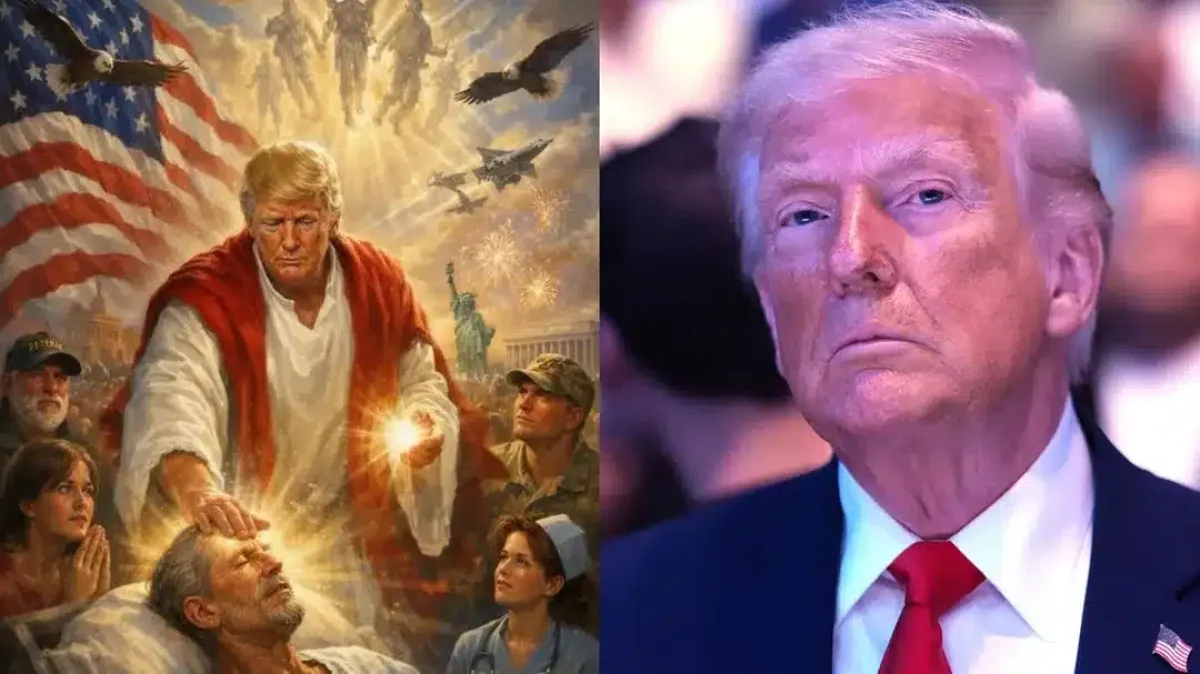
The image, reportedly posted on Trump's Truth Social platform before deletion, sparked widespread criticism after appearing to depict the former president in imagery resembling Christian religious symbolism. Speaking to reporters at the White House on Monday, Trump categorically rejected interpretations suggesting religious intent, claiming the image had been severely misrepresented by media outlets.
"Well, it wasn't a picture of that," Trump stated. "I thought it was me as a doctor, and it had to do with Red Cross as a Red Cross worker there, which we support, and only the fake news could come up with that one."
According to Trump's explanation, the image was intended to represent healing and humanitarian work rather than any religious portrayal. "It's supposed to be me as a doctor making people better, and I do make people better. I make people a lot better," he added.
The image that circulated online depicted Trump wearing flowing robes, surrounded by radiant light with his hands outstretched in a pose that observers interpreted as a healing gesture commonly associated with traditional depictions of Jesus Christ. The visual composition also included figures resembling angels or armed personnel floating in the air, alongside fighter jets and fireworks, blending religious symbolism with elements of American nationalism and military imagery.
Following the image's circulation, critics from various sectors described it as inappropriate and offensive, particularly emphasizing its visual resemblance to traditional religious artwork. Some commentators argued that the composition crossed important religious boundaries, while others accused the former president of promoting imagery that elevated his political persona to symbolic or messianic levels.
The controversy emerged amid escalating tensions between Trump and Pope Leo XIV. Trump recently criticized the pontiff over his positions on numerous global issues, describing him as "weak on crime" and "terrible for foreign policy." He further accused the pope of unfairly targeting his administration and failing to adequately criticize restrictions imposed on religious gatherings during the COVID-19 pandemic.
Despite the substantial backlash, Trump maintained that the entire controversy resulted from deliberate misinterpretation. He reiterated that the image carried no religious intention whatsoever, insisting instead that it was specifically designed to symbolize healing, humanitarian service, and support for medical and relief organizations like the Red Cross.