Pentagon's AI Project Maven Powers US Strikes on Iran
Project Maven, a Pentagon AI program launched in 2017, has evolved into a sophisticated targeting system that dramatically accelerates military strike operations, raising significant ethical concerns.
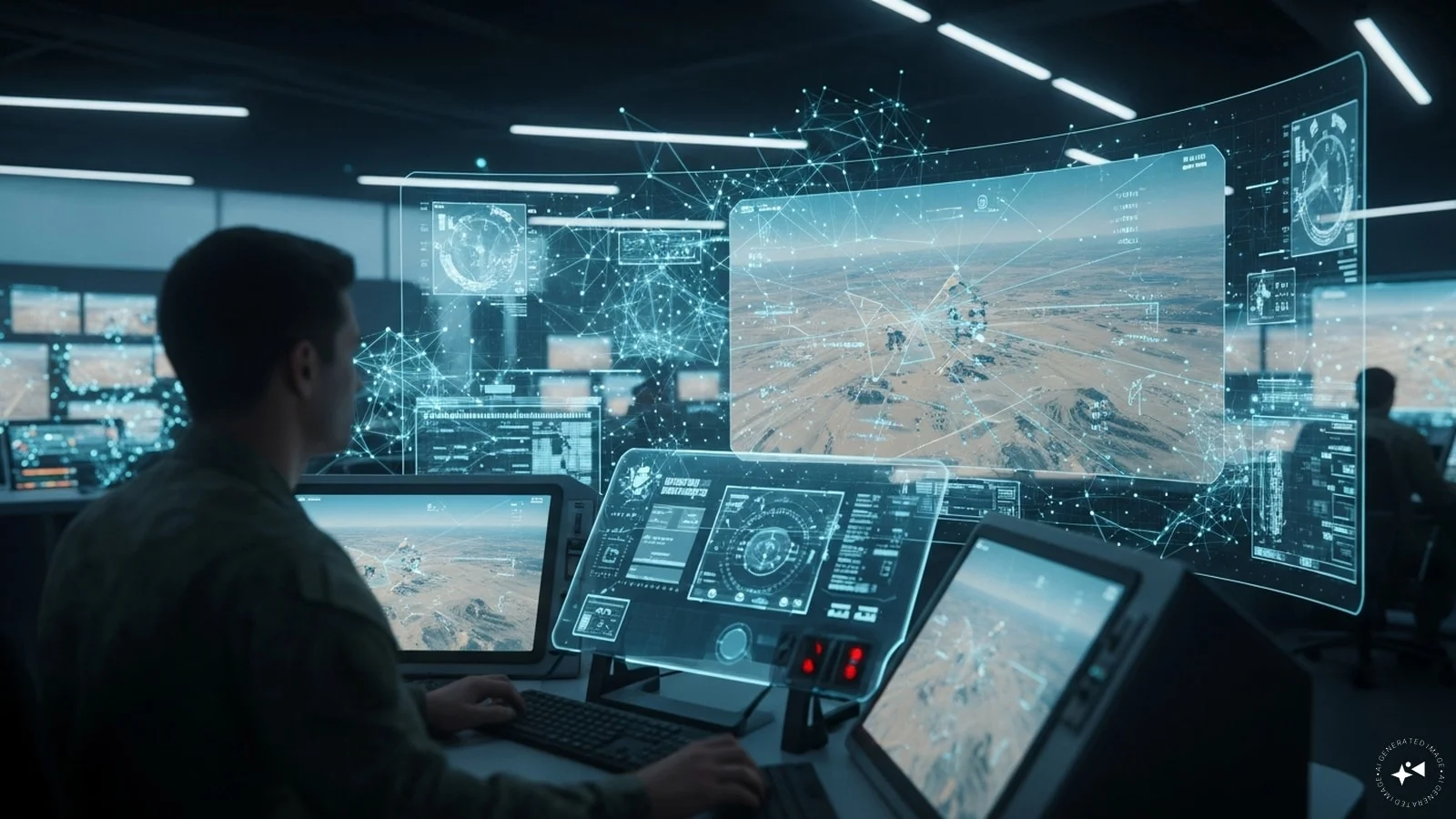
Project Maven stands at the center of recent US military operations against Iran and represents one of the most consequential transformations in modern warfare. This Pentagon artificial intelligence program, which began as a narrow experiment in 2017, has evolved into a comprehensive AI-assisted targeting and battlefield management system that fundamentally changes how military operations are conducted.
The program was originally designed to help military analysts process the overwhelming volume of drone footage streaming from conflict zones. Operators faced an impossible task: manually searching through endless video frames to identify objects of interest that might appear only briefly before disappearing. Project Maven was created to solve this problem by automatically finding the critical details in massive amounts of data.
Today, Maven functions as both the air traffic control and cockpit of battle. According to Aalok Mehta, director of the CSIS Wadhwani AI Centre, the system acts as "essentially an overlay" that fuses sensor data, enemy intelligence, satellite imagery, and troop deployment information. In practical terms, it rapidly scans satellite feeds to detect troop movements and identify targets while simultaneously creating a snapshot of the operational theater to determine the optimal approach for striking specific objectives.
The integration of natural language AI technology, initially powered by Anthropic's Claude, has expanded Maven's accessibility to a much broader range of military personnel. However, this partnership recently deteriorated after the Pentagon objected to Anthropic's requirements that the model not be used for fully automated strikes or domestic surveillance of US citizens.
Google's involvement with Maven highlighted the ethical tensions within Silicon Valley. When over 3,000 Google employees signed an open letter in 2018 protesting the company's participation, several engineers resigned over ethical concerns. Google declined to renew the contract and subsequently established AI principles explicitly prohibiting weapons system involvement. The company has since reversed this position, and the Pentagon is now considering Google, along with xAI and OpenAI, to replace Claude in Maven operations.
Palantir Technologies, founded partly with CIA funding and designed around government intelligence work, has emerged as Maven's primary technology contractor in 2024. The company's AI now forms the operational backbone of the program. CEO Alex Karp emphasizes the strategic importance, arguing that compressing the kill chain from hours to seconds renders adversaries obsolete in modern conflict.
The performance of Project Maven in current operations remains undisclosed by both the Pentagon and Palantir. However, the sustained pace of US strikes suggests the system plays a central role in accelerating targeting and firing processes. According to the Centre for Strategic and International Studies, after three weeks of operations, the US strike campaign maintained a pace of 300 to 500 targets daily. In the first 24 hours alone, Operation Epic Fury struck over 1,000 targets, including a school in a building previously used as a military complex. Iran claims this attack killed 168 children aged seven to twelve and wounded numerous others, highlighting the ongoing humanitarian concerns surrounding AI-assisted warfare.